
Older Torsion Systems
Spring sizes and winding hardware on older garage doors may differ from the components commonly stocked for newer installations.
Local garage door service · McDonough, GA
McDonough garage door repair and replacement for 1960s-2000s homes, covering spring repair, opener repair, off-track repair, and roller replacement.
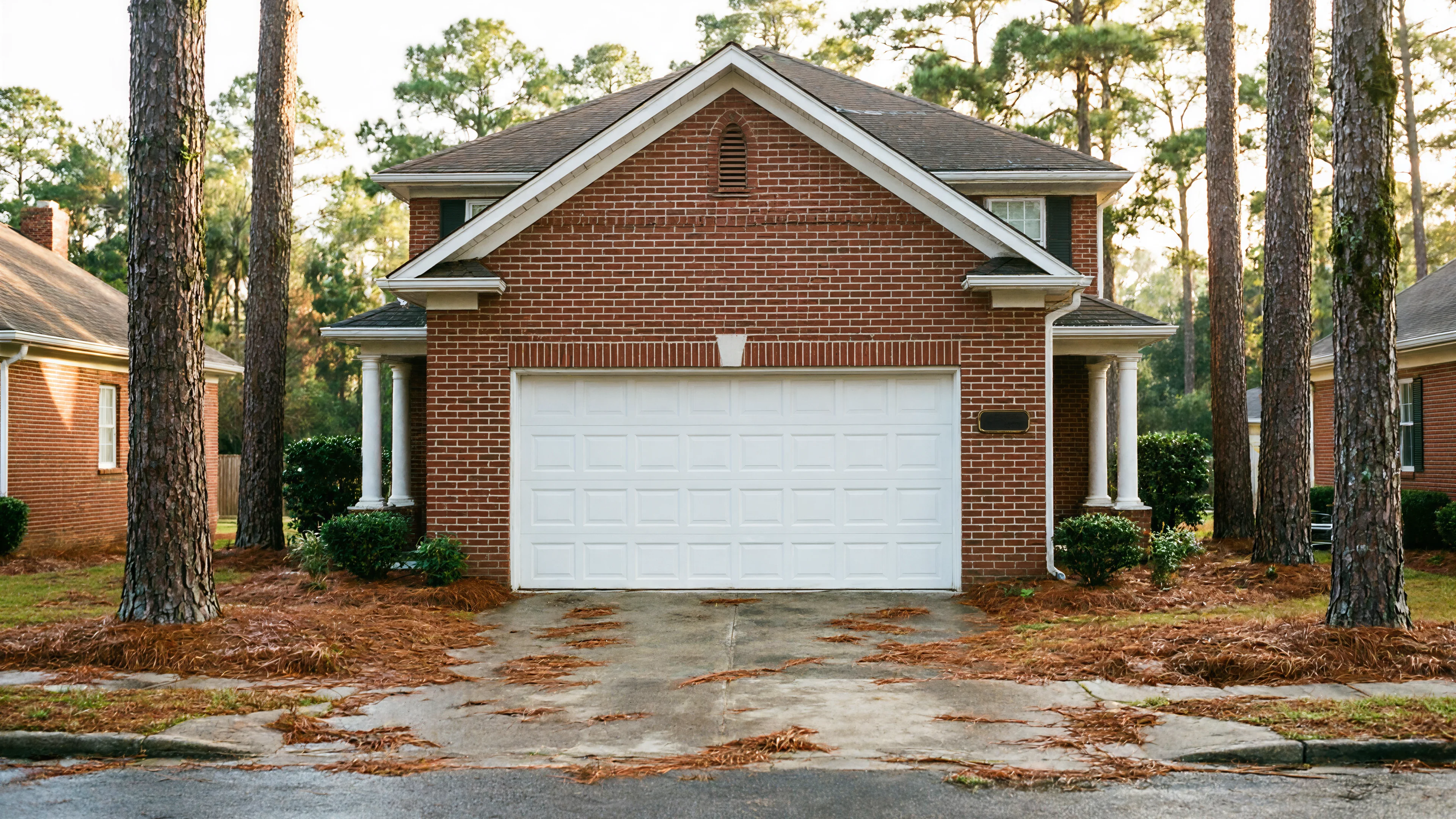
Garage door services
From emergency repair and installation to off-track service, opener repair, roller replacement, spring repair, and general garage door service, the lineup is built around McDonough's broad 1938 - 2007 housing stock.


Local housing matters
The broader source service area spans homes built from 1938 through 2007, with much of the housing concentrated in the 1960s and 70s.
The broader footprint covers approximately 17 named areas.
Older homes can retain original opening dimensions, track layouts, end bearing plates, spring hardware, panels, or other components even after the opener or some moving parts have been replaced.
The broader area includes approximately 37,107 households, including about 15,752 owner-occupied houses.
The home's build era provides useful context, but the correct repair depends on the hardware actually installed today.

1930s - 2000s garage door systems
McDonough's broad housing range means garages can combine older torsion systems, original track layouts, replacement openers, modernized panels, and several generations of rollers, cables, and spring hardware.
Spring sizes and winding hardware on older garage doors may differ from the components commonly stocked for newer installations.
Older homes can retain track spacing and supporting hardware that has shifted or been modified through previous repairs.
A garage may have a newer opener or spring while retaining older tracks, panels, rollers, cables, bearing plates, or other components.
Homes toward the 2007 end of the range can use substantially newer hardware than the area's dominant 1960s- and 70s-era stock.
Repair or replace?
A broken spring, cable, roller, or isolated track problem doesn't automatically mean the whole garage door needs replacement. Replacement becomes more practical when the door structure itself is deteriorating or several major components are failing together.
A targeted repair can make sense when the panels, frame, tracks, opener, springs, and surrounding structure remain serviceable.
An older garage door can remain worth keeping when its structure is sound and the immediate failure is isolated.
Replacement becomes more practical when steel panels are rusted through or older wood sections have substantially deteriorated.
When the frame, tracks, panels, opener, and other major components all require substantial work, broader replacement can offer better long-term value.
Common McDonough garage door problems
Broken torsion springs, worn rollers, track problems, aging openers, cable wear, and older hardware make up much of the work across McDonough's housing stock. Broken torsion springs are a recurring repair need, particularly on older garage door systems; rollers and tracks accumulate wear or alignment problems over years of regular use; older opener systems reach the end of their working life after decades of operation, while cables fray near lower brackets or drums. Most local failures are ordinary mechanical problems rather than unusual or exotic faults, and the correct repair depends on inspecting the entire system and identifying which component is actually failing.
Garage door springs eventually reach the end of their useful cycle life after years of repeated opening and closing.
Rollers can become noisy, rough, damaged, or resistant after years of regular track travel.
Long-term wear, impact, roller problems, or movement in older garage structures can interfere with reliable track alignment.
Older opener motors, gears, boards, controls, and sensors can eventually develop age-related operating problems.
Cables can fray, loosen, slip, or fail after years of carrying repeated lifting loads.
Seasonal garage door wear
McDonough sits in a cold-moderate climate band, so seasonal operation tends to expose existing spring fatigue, moisture-related wear, seal deterioration, track issues, and normal mechanical aging rather than freeze-thaw conditions alone causing failure.
Cooler seasonal operation can expose weakness in a spring already approaching the end of its useful cycle life.
Long-term moisture exposure can contribute to corrosion on lower panel seams, springs, tracks, hinges, and other steel components.
Worn rollers or marginal track alignment can become more noticeable when an older door already has added resistance.
Older seals and weatherstripping can crack, flatten, or lose contact after years of seasonal exposure.
Clear repair guidance
There isn't one flat repair price, because spring work, opener repair, roller replacement, track service, installation, and other garage door jobs involve different parts and labor.
The age and type of spring, track condition, opener generation, previous repairs, and parts availability can all change the scope.
Median household income across the broader service area runs around $50,060, but the price still comes from the door in front of us.
Some older torsion spring sizes are not common truck stock and may require additional sourcing.
We identify what is actually broken and quote the repair before work begins rather than sell components the door does not need.
What to expect
We start with what the door is actually doing, ask about the home and door, diagnose before starting, and set a clear parts expectation when older components need sourcing.
Describe whether the door will not open, will not close, made a loud bang, or the opener runs without moving the door.
We ask about the approximate age of the house and garage door because it helps narrow down which hardware generation may be installed.
The springs, rollers, tracks, cables, opener, panels, and supporting hardware are inspected before the repair scope is finalized.
Simple repairs may be completed during the visit, while older or nonstandard components can require additional sourcing.
Not Every Older Part Is Truck Stock
Some obsolete spring sizes and nonstandard older components can require ordering rather than being treated as guaranteed same-visit repairs.
Built around McDonough garage doors
We use the home's age as useful context while still inspecting the actual garage door, opener, tracks, springs, and other hardware before recommending a repair.
Knowing roughly when the house was built can help narrow down the likely spring, opener, track, and door configuration.
Spring sizes, winding hardware, roller types, opener models, and track layouts should be checked directly.
If the door structure remains sound and one component is the actual failure, complete replacement is not automatically necessary.
Older or obsolete components can require additional sourcing, and we explain that before unnecessary work is performed.
Service areas
The broad McDonough-area footprint extends through nearby Henry County communities and surrounding towns. That reaches Locust Grove, Hampton, Lovejoy, Jenkinsburg, Bonanza, Jackson, Lithonia, and additional surrounding areas.
For this site's configured architecture, the homepage service-area links cover Forest Park, Hampton, Irondale, Locust Grove, Lovejoy, and Panthersville.
Most of those communities sit roughly 7 to 11 miles out, with farther areas like Jackson and Lithonia still within the service range.
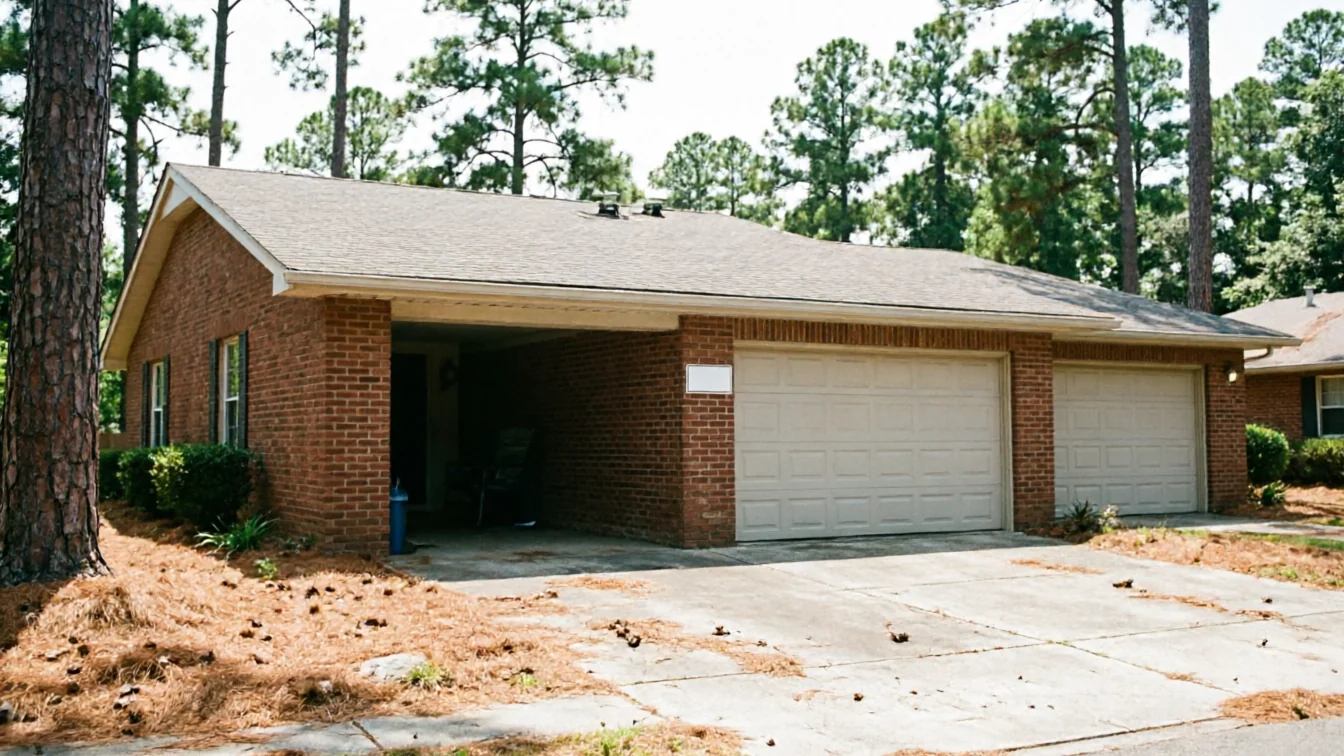
Questions
There's no fixed age - we've seen doors from the 1970s still sound and doors from the 1990s rusted through. What we look at is the panel condition and frame, not just the year. If the steel's rusted at the bottom or the wood's delaminated, repair just delays the same call.
Yes. We cover the surrounding area out to places like Locust Grove, Hampton, Lovejoy, Jenkinsburg, and Bonanza, roughly 7 to 11 miles out, as well as farther areas like Jackson and Lithonia within our service range.
Because the real cost depends on what's actually broken and how old the hardware is. A lot of homes here have original springs or openers from the 1960s-70s build era, and sourcing an obsolete part changes the job. We quote after we look, not before.
It's common. A good share of houses in our service area were built in the 1960s and '70s, and plenty still have original openers that have simply reached the end of their working life rather than failed from a single breakdown.
Ready when you are
Tell us what the door is doing and we'll help you figure out whether you're dealing with a spring, opener, roller, off-track door, cable, panel, installation, or another aging component in the system.